Friday, February 14, 2020

The Samurai: Extra Credit in History

To earn extra credit in history complete this assignment.

Before watching the video from the History Channel set up a piece of paper for Cornell notes.

Set off the bottom third of your paper for the summary.  Divide the top section into two parts: one on the right for bullet point notes and one on the left for questions about the video.

Take 14 notes on the video.  These should be bullet point notes.  Write your notes in the right hand column.  You may take notes on anything in the video that interests you.

Ask at least three questions about the samurai in the left hand column.  These should be complete sentences.

For the bottom third of your paper write a summary of your notes.  Combine more than one note into single sentences.  Your summary should be seven sentences long.  You  may use the back if you need to.

Here is the video.


This assignment is due on Friday, Feb. 28 and is counted as extra credit in  history.

Thursday, February 6, 2020

Marco Polo and Ibn Battuta go to China(?)

Create a small (8 1/2 by 11)  travel poster encouraging people to visit Quanzhou (Zayton), China in the 14th century.

Use your packet on Marco Polo and Ibn Battuta for information.  You may also use other sources like your China folder, the textbooks, the internet.

Use portrait orientation for your poster.

Include in your small poster these items:

  • A large title/slogan that encourages people to visit Quanzhou.
  • A bullet point list of things to do/see in Quanzhou.
  • A positive quote about Quanzhou from Marco Polo and one from Ibn Battuta. Use your packet for this.
  • A small map showing the location of Quanzhou.
  • A illustration of some kind.  Make sure it show 14th century images, not modern ones. 
You make your poster using any materials or techniques you like.  We will work on this project in class Thursday and Monday.  


Monday, February 3, 2020

Book Tower Project for Reading Races


Book Tower Project for Reading Races

These towers will be started in class.

Be sure to use time wisely. Anything you don’t complete must be completed at home.

Cards live in your Ziplock bag until the project is complete.

You may select any book you have read for Reading Races. Your choice must be signed off on your reading race list for the spring semester.

Begin by writing your name and the title of your book on the read line of each card.

 Card One:Setting. On the lined side of your card, label Setting and write a multi-sentence description of the setting, including time (past, present or future) and place. If there are multiple main settings, explain this. If the setting helps create a conflict in the story, explain this (example: if the character goes on a journey through dangerous mountains, the setting is helping create conflict).

 On the unlined side, draw a depiction of an important part of the setting.

 Card Two: Protagonist/ Main Character. On the lined side of the card, label Protagonist and explain who the protagonist or main character is. Include:

  •  A multi-sentence explanation of important aspects of the character 
  •  Three specific character trait adjectives (use page 2 of your English journal for ideas.)
 If there is more than one main character, explain this and write about both.

 On the unlined side of the card, draw a picture for the main character. You can be creative about how you will portray them, including using cut paper/ paint/ other artistic techniques.

 Card Three: Conflicts. On the lined side of the card label Conflicts and explain one of the major conflicts in the book.

 On the unlined side write what type of conflict the main conflict is: person v person; person v self; person v society or person v nature.

Card Four: Motif On the lined side of the card, choose one motif used in the book. Explain what it is and why it is important.

 On the unlined side, draw a picture that illustrates the motif you chose.

 Card Five: Hero’s Journey On the lined side of the card, choose one element of the Hero’s Journey you have found in your novel. Examples include:

  •  Mentor 
  •  Test 
  •  Talisman 
  •  Reward 
  •  Abyss
  • Shadow
 Label which element you have chosen. Explain how that element of the Hero’s Journey works in your book..

 On the unlined side, draw a picture that illustrates the element you chose.

 Card six: Plot.   On the lined side of the card, label Plot, and summarize the plot of the entire story in multiple sentences. Do not use the back of the book. It must be in your own words. 50 words or less.

 On the unlined side, write the title and author or the book neatly and decoratively and write your own name at the bottom of the card.

    Assemble your tower as instructed, and turn in!

 Due date: Tuesday, Feb. 11.

Monday, January 27, 2020

Chinese Discoveries and Inventions

To prepare your mini-scroll about China's inventions and discoveries complete these steps.
  • Select the top four inventions and discoveries based on how much they continue to influence our lives today.
  • Create a scroll about them using the paper strip you were given in class.
  • Include 
    • a title "page" at the start of your scroll.  Put your name on this section.  Both should be in English and in Chinese characters
    • a section (page) for each discovery/invention you selected with 
      • the name of the discovery/invention
      • the Chinese characters for it
      • a picture of it
      • a four to six sentence paragraph about it that
          • explains  it
          • describes which it is still important
You project will be graded on:
  • Completeness
  • Visual appeal
  • Historical accuracy

This project is due on Wednesday, January 29, 2020.

This is a 60% project.

Here is a sample:


Thursday, January 16, 2020

Witness in a Box: Make your own Cornell box

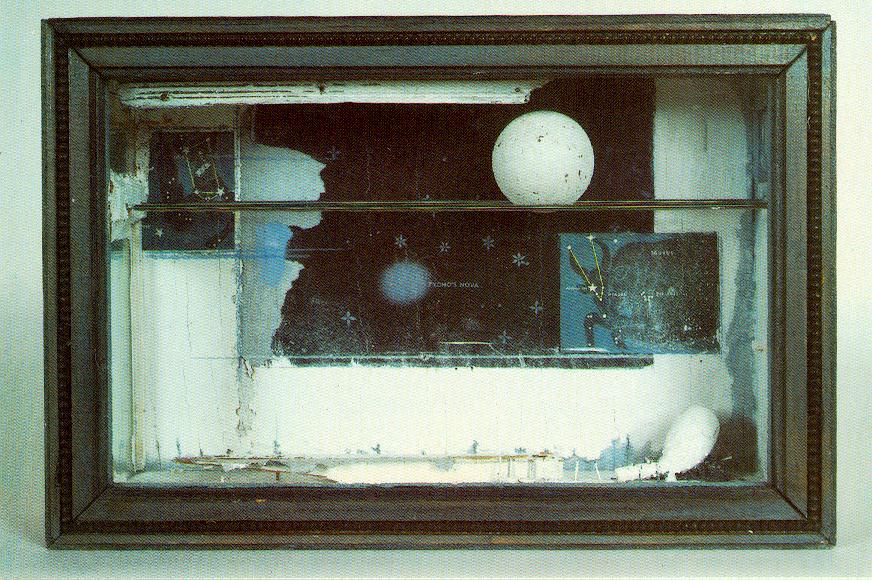
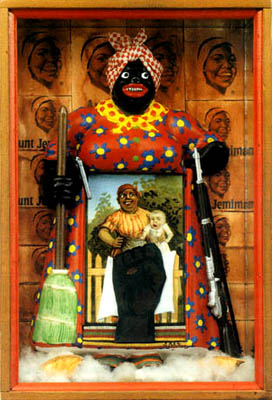
Here are some examples of Joseph Cornell and Betye Saar's work.  You can use these as models or inspirations for your own Witness in a Box project.


"Parrot for Juan Gris" by Joseph Cornell


"Cassiopeia 1" by Joseph Cornell


"We Was Mostly About Survival" by Betye Saar


"The Liberation of Aunt Jemima" by Betye Saar


Rules for your Witness in a Box project.

Must use: 
  • a box provided by the teacher.
  • images and shapes
  • something that hangs or moves
  • creativity
May not use:
  • words.
  • images of the person.
  • photographs of the actual event.
May use any material in the classroom or at home.

This is a 60% project.*  Be creative. Take your time. Make your product look good.


*Final grade will include an artist statement, your written summary and a presentation to the class


Friday, January 10, 2020

Witness in a Box - A Research Project for Brown Girl Dreaming

Brown Girl Dreaming by Jacqueline Woodson. 

How is where we come from important to who we are?

Much of Brown Girl Dreaming deals with the theme of how where we come from affects who we become.  This includes time as well as place.  The time period a child was born into, what was going on in history during your early life, affects the adult she grows up to become.

For this project you will research a person or event from the time period covered in Brown Girl Dreaming, the Civil Rights Era in American history.  You will then create a "Cornell Box" that illustrates your research as a visual metaphor.  You will also write up a 250 word account of your research.  Both your research and your Cornell Box will be presented to the class as a speech. 

You must select a topic/person from the list below.  As part of your research, you will use the audio/visual link attached to your topic, photographs of the event/person you can find online and one article that you locate on your own.

Here are the people/events you can choose from.  Be sure to let the teacher know what your selection is.  No more than two people may do the same topic.

  1. Dorothy Mulkey (Fair housing advocate)
  2. Shirley Chishom (First woman to run for president)
  3. Ruby Bridges
  4. The 16th Street Bombing
  5. The Children's Crusade
  6. Martin Luther King's "I Have a Dream" speech.
  7. Mississippi Burning
  8. The Loving Decision (Mixed Race Marriage)
  9. Greensboro Lunch Counter
  10. Freedom Riders
  11. James Brown's concert the day after M.L. King was killed
  12. Muhammad Ali's decision to refuse the draft
  13. Black Like Me
  14. Petula Clark/Harry Belafonte (television controversy)
  15. Dance Theatre of Harlem
  16. Roots 
  17. John F. Kennedy
  18. Malcolm X 
  19. Rosa Parks
  20. United States Colored Troops 54th Regiment
  21. Lena Horn
  22. Black Panthers
  23. James Baldwin (Author, Civil Rights Activist)
Each person is linked to an audio/visual program about them.  You are required to use this program as part of your research.  Listen to it once, then listen again while taking notes about it. 

Find a second article about that person or event and a few photographs to help you understand the importance of your selection.  You may print out a few photographs (1 to 3) to use as part of your Cornell Box.  However, you may not use a picture of the actual person or event.  Your Cornell Box must be a metaphor, not an exact representation.

You will use your research to create a box about your selection in class.

Thursday, January 9, 2020

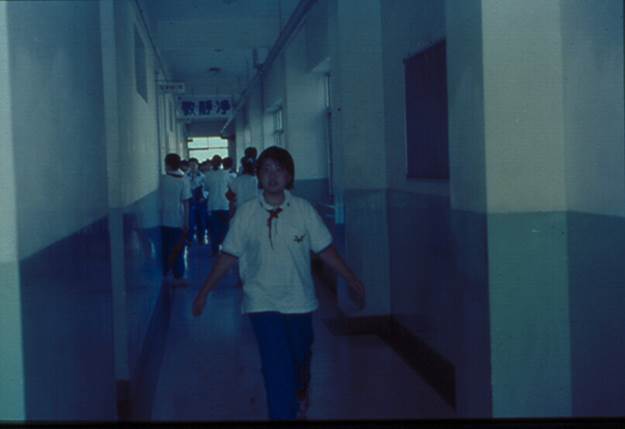
Middle Schools in China


The pictures below show scenes from middle schools in present day China.  Observe each picture and answer the questions that follow.  Some pictures do not have questions, just text to read.  Write your answers in complete sentences on binder paper.  Each student must write their own answers.  You may work with the people sitting near you.


1. These are three different schools in China. As you can see, they are very different from each other. Which one looks most like the school you attend?
2. This is a student arriving at school. Classes at this school meet from Monday through Friday. What are the students wearing? What are they using to bring their books and papers to school? How are these students different from students in your school?


 3.  This is a list posted outside of a middle school with the names of students who have performed well academically. Is there a similar system to honor certain students at the school you attend?


4. Students are allowed 10 minutes between classes. These breaks are often noisy and halls are often crowded with students. How does this compare with your school?


5.  Every Monday, schools have a "flag raising ceremony" during which the whole school participates in a morning assembly.  Here, a group of students marches and raises the flag of the People's Republic of China.  Is there anything similar to this ceremony in your school?


6.  Every morning at around 10 a.m., all students gather to do their morning exercises.  Exercises consist of stretching and some calisthenics. Students line up in rows and three or four students lead the whole school in this morning ritual. What do you think of this activity?  Is there anything similar to this in your school?


7.  In many Chinese schools, students are responsible for keeping the school clean. The badge on this student's arm indicates that she is on cleaning duty. Who cleans your school?  What do you think about the idea of having students in charge of cleaning?


8.  Students also engage in "eye exercises." Students rub specific parts of their face around their eyes and also their necks.  These exercises are designed to protect the eyes and are based on the practice of acupressure.  Acupressure is a Chinese medical technique in which specific points in the body are pushed or pressed to help relieve pain or treat illnesses.  How do you think American students would react if their teachers asked them to do this?


9.  Like many places in the world, this Chinese school is concerned with technology and wants students to have access to computers. Students in this middle school can take computer classes and have access to the Internet.  There is a huge "digital divide" in China with many schools not having computers.  How does this compare with your school?


10.  Occasionally, students host a talent show or student assembly. Many students choose to sing, like this student. Some of the songs are in Chinese, but some students choose to sing in English.  Are there any events like this in your school?


Monday, January 6, 2020

Martin Luther King of the Metaphor

This project is due on Thursday, January 9.  This project is for English classes only.

Students are to take one of the metaphors in Martin Luther King, Jr.'s "I Have a Dream" speech and turn it into a visual metaphor.  We began this assignment in class today.

Artwork should follow these rules:
  1. cover the entire paper with other paper.
  2. use the "I Have a Dream" speech page.
  3. include the metaphor in writing.
Here are two samples from other classes.


Here is the video of the speech we watched in class today, just in case you'd like to watch it again.


Thursday, December 5, 2019

Warli Art from India

Here are links to the articles and videos you'll need to use to complete the worksheet.

Read this article and answer the questions.  Read only the section on Warli Folk Painting

https://knowindia.gov.in/culture-and-heritage/folk-and-tribal-art/warli-folk-painting.php


Watch this video. The artist is drawing the story while he is telling it using modern technology and traditional Warli art.  Answer the questions.

https://www.youtube.com/watch?v=IbFzmxLQcxk&t=321s


Watch the Trapa instrument being played while the people dance. 

https://www.youtube.com/watch?v=DnYDjQ-FF70


Coca-Cola videos with Warli art from 2010

https://www.youtube.com/watch?v=aIlg9qnw664


Documentary on the Warli Tribe

https://www.youtube.com/watch?v=C-Mvr7rUWRo


When you are finished, see Mr. Chester for materials to make your own Warli artwork.

Create a scene from your own life.  Fill the page with artwork.


Tuesday, November 19, 2019

NHD Website and Documentary Information

WEBSITES

To create a website for National History Day go to nhd.org/nhdwebcentral.

There you will be able to register, see videos about how to  make a website and log-in to the web site program.

To register you will need your parents email  and phone number.  To register, go  here.  You can register and then sign in to the program.

Before you make your website, watch the how-to videos here.  Select the Step-by-Step Videos button to view them.  They are short and very helpful.

DOCUMENTARIES

You  may use any video design software you have to make your video, including iMovie.  You can make your doumentary on your phone.

If you don't have video design software,  you can use Adobe Spark for free on your Chrome book.

Go to your  Clever.com page and click on the icon for Adobe Spark.  Set up your account.  If you can do this at home you can go ahead and start work on your documentary.  There are some video tutorials at Adobe that you can watch before you begin.

To capture/convert Youtube and other videos follow these steps:


  • Find your video and then copy the url link
  • Go to www.onlinevideoconverter.com or another video converter program.
  • Select convert video link
  • Paste the url link of your video in the box
  • Convert the video to an mp4 file.
  • After the conversion, press download. This will put the file in your  drive probably in a file labelled downloads.
  • Go to your documentary in Spark
  • Select the + button and choose video
  • You should be able to find your video in the drive folder that pops up.
  • Edit video to include just the portion you want to include.  Be care here because you cannot undo this action.  You can delete the slide and redo it.
  • Save your work
This looks like a lot of steps, but once I figured it out, it was fairly easy to do.

However, if you can put video in your documentary on a laptop or other computer, it's much easier than doing it on a Chromebook.  You can just download the files to your desktop after they are converted and then upload them to Spark.

Friday, October 25, 2019

The National Parks in Walk Two Moons: A Travelling One-Pager Poster


Image result for national parks logoIn the book Walk Two Moons by Sharon Creech, Salamanca and her grandparents take a trip across America from Euclid, Ohio to Lewiston, Idaho to see Sal's mother.  Along the way they stop at four national parks:  Yellowstone, Badlands, Mt. Rushmore and Pipestone National Monument.

For this assignment,  you  will select one of these four parks to research and create a one-pager poster encouraging tourists to visit.

Use the links below to find the national park website for your project.  You should be able to get all of the information you need from that website.  However, you may do additional research. 


Your one-pager poster should include:

  • a slogan featuring the name of your park. For example: "Visit Yosemite: You're Half-Crazy if You Don't See Half-Dome" or "See Death Valley; It's To Die For."
  • a border that relates to your assigned park.
  • a list of basic information including:
    • visitor center hours
    • entry costs
    • campsites and other facilities like restaurants and/or stores
  • a description of two things visitors can do or see at the park. This should be written as a paragraph in a way that will attract visitors.
  • one or two large illustrations of  major park attractions.  You must create your own artwork.  No printouts or photos. Ask your teacher about tracing, but probably not.
  • other creative touches and information to make your one-paper visually appealing and interesting reading.
Your one-pager poster should be written to encourage people to come and see your park.  Think of it as an advertisement.

Choose one of the parks below for your project:


Read over the website for your park then create your one-pager on large paper.

This assignment is due on  Thursday , Nov. 7.


Monday, September 30, 2019

Hugo Cabret: Automaton One-Pager


Create a one-pager on Maillardet's automaton using text and images to creatively highlight the most important information. Be sure to include the following:
  • The definition of automaton (the plural is automata)
  • A description of how Maillardet's automaton works and its capabilities
  • A description of the following items:
    • the automaton's history, including its creation and creator
    • how it was damaged
    • the roles Charles Penninman, Bryan Selznick, and Andy Baron played in restoring the device
    • its influence on the novel, The Invention of Hugo Cabret.
You can use these links to complete the one-pager assignment about Maillardet's automaton.

CBS Sunday Morning video The Lost Art of Automata Lives Again


The Maillardet automaton in action
https://www.youtube.com/watch?v=jfeNC28vpYo


You may type up the written part of your project, cut it out and glue it onto your one-pager, however, you must draw your own artwork by hand.


Wednesday, September 25, 2019

Thomas Aquinas Video

This video was made by a group of teachers several years ago.

The music is the song 'Venus' by Bananarama.


Monday, September 23, 2019

The Church Poem Project

Students all received a longer version of these directions in class on  Monday.

Create an illuminated manuscript of a poem describing the structure of the Roman Catholic Church and its influence on daily life in Medieval Europe.

  • Nine stanzas.  
  • The first letters of the stanzas spell out "The Church".
  • The 'T' must be illuminated.  Other letters may also be illuminated
    • Student may create their own illuminations or us on-line sources
  • Use nine words from the word bank.
  • Use correct spelling and grammar
Rhyming is encouraged but not required.

Grades will be largely based on how much accurate history each poem contains.

Word bank

cathedral
monasticism
sacraments
diocese
parish
salvation
Emperor Henry IV
pilgrimages
Thomas Aquinas
excommunication
Pope Gregory VII
universities
holy days
religious orders

The poem should fit on the left side of a ledge size paper.  Your stained class artwork will go on the right side.  (See the example above.)

This project is due on Friday, Sept. 27.  It is a high-value, 60% project.

Thursday, September 12, 2019

Annotated Castle Projects

Browse through the book Castle by David Macaulay.

Use David Macaulay's book, your history book and your journal notes to create an annotated "drawing" of a Medieval European castle.  Due Thursday, Sept 19.  You will  have time in class to work on this project today (Friday). After today, this is homework.

You may trace. You may use artistic methods other than drawing.

You may draw all or part of the castle.  You may do a "bird's-eye" drawing. You may include the manor or a town as part of your drawing.  You  may do any type of defensive European Medieval castle from the years 1000 to 1400. They must be realistic. No fantasy castles or fantasy elements.

Include 10 annotations (2-3 sentences each).  An annotation is more than just a label.  Annotations include full sentences explaining the item they label
  • Six annotations should label and explain a part of the castle:  Do some research on this.  You may include basic things like a bailey or a drawbridge, but higher scoring projects will include things like the portcullis, murder holes, garderobes, arrow loops, parapets.  (Look  them up.)
  • Four should label and describe a person: one for each of the four main social classes.  (Monarch, lords/ladies, knights, peasants).  You can draw these people or you can simply draw a line to the room in the castle where the monarch stays for example.  Tell something about that class or type of person.  How they live. What kind of work they do. etc.
Annotations should contain lots of historical information

Drawings (artwork) should show effort.

Here are some examples of annotated castles I have found.  Some of these would not get a very good grade from me because their annotations are so short and contain so little information. But they are all very good artwork.


There is also one in your history book on page 71 and 73.  

You may trace a picture in Castle for this project as long as your work shows effort.  

Tuesday, September 10, 2019

National History Day: Breaking Barriers in History - Possible Themes

Here are some links to lists of possible themes.

The NHD 2020 Theme Book has many suggestions linked to different museums and historical groups. You'll have to scroll down towards the last third of the guide book where they are listed.  It's a good idea to read through this book to get a good since of what is involved in winning National History Day.

Check this space for additional topics. We'll add more as we find them.

NHD-CA Topic List
Breaking Barriers in History 


Physical Barriers
Berlin Wall 
Lewis and Clark Expedition
Cumberland Gap & Daniel Boone
Transcontinental Railroad
John Wesley Powell 
Panama Canal
Building of the Golden Gate Bridge
Japanese Internment

Innovation Barriers 
Nicolaus Copernicus
Galileo Galilei
Hedy Lamar (Mathmatician/Actress)
Cecilia Payne Gasosdekin 
Development of Braille
Susan LaFlesche Picotte
Joseph Lister
Nuclear Weapons
Heart Transplant
Smallpox Vaccine
Apollo Mission
Margret Hamilton
AIDS / HIV Crisis
Development of Communication: 
Telegram, Telephone, Radio
Valery Legasov, Chernobyl
Buck vs. Bell
Eli Whitney
Samuel Morse
Robert Fulton
Penicillin 
John Audubon
John Muir
Dorothea Dix
Women in Scientific Revolution: 
Countess of Lovelace, Maria Winkelmann,   
Countess of Chinchon, Emilie du Châtelet,
Maria Cunitz, Lady Mary Wortley Montagu,
Margaret Cavendish, Elisabeth Hevelius
Clara Barton, American Red Cross
Alexander Graham Bell
Wright Brothers
Thomas Edison

Legal Barriers
Trail of Peter John Zenger, 1735
Homestead Act
Chinese Exclusion Act
Scopes Monkey Trial
Westminster v. Mendez
Truman Desegregation 
Chief Justice Earl Warren & the Warren Court
Brown v. Topeka Board of Education (1954)
Ruby Bridges
Little Rock Nine
Boston Busing Boycotts
Berkeley Free Speech Movement
Perez v. Sharp (1948)
Griswold v. Connecticut (1965) 
Loving v. Virginia (1967)
West Virginia v. Barnette (1943)
Brandenburg v. Ohio (1969)
Cohen v. California (1971)
Texas v. Johnson (1989)
Brown v. Board of Education (1954)
Gideon v. Wainwright (1963)
Hazelwood v. Kuhlmeier (1988)
Miranda v. Arizona (1966)
New York Times v. Sullivan (1964)
Tinker v. Des Moines (1969)
Dred Scott v. Sandford (1857)
Plessy v. Ferguson (1896) 
Baker v. Carr (1962)
Gideon v. Wainwright (1963)
Plessy vs. Ferguson
Americans with Disabilities Act
Education of Handicapped Children Act
504 Sit-ins 
Immigration and Naturalization Act of 1965
Lyndon B. Johnson and the Voting Rights Act

Societal Barriers
Romanticism Literature
Reformation
Counter Reformation
Papal Schism
Martin Luther, 98 Theses 
Akbar, the Mughal Empire, and Divine Faith
Russian Orthodoxy
Gutenberg Printing Press
Ann Hutchinson
Great Awakening
El Clamor Publico
Allensworth Township
Booker T. Washington 
Nellie Bly
Thomas Gallaudet
Hellen Keller
Tennessee Home for Children
Jane Addams, Hull House
Jacob Riis
Margaret Sanger
Flappers
Jesse Owens
Code Talkers
Zoot Suit Riots
Private Desmond Doss
Greensboro Sit-ins 
Lavender Scare
Compton’s Cafeteria Riots
Martin Luther King Jr.
The Southern Christian Leadership Conference 
1968 Mexico City Olympics 
Black Power Movement
NAACP
Walter White - Anti-lynching activist
Harvey Milk
Stonewall
Temple Grandin
WACS: women in the armed services 
Chicano Student Walkout in LA High Schools
Billie Jean King vs. Bobby Riggs
Gloria Steinem
Phyllis Schafly 
Sandra Day O’Connor
Don’t Ask Don’t Tell Policy
Political Barriers
Pericles
Cincinnatus
Anne of Cleves
Benazir Bhutto
King George & Qian Long
Queen Elizabeth I
Queen Mary of Scots
Magna Carta
English Bill of Rights
Declaration of Rights of Man and Citizen
Mayflower Compact 
Roger Williams
Sons of Liberty 
Paul Revere
Boston Tea Party 1773
Benjamin Franklin
Declaration of Independence
French Revolution  
Maximilien Robespierre
Whiskey Rebellion, 1794
Political Parties
Alexander Hamilton
Marbury v. Madison (1803)
Fletcher v. Peck (1810)
Toussaint L ’Overture
Bonaparte Napoleon
John Brown
Harriet Tubman
Joseph Smith
Brigham Young
Ida B. Wells
Susan B. Anthony
National American Woman Suffrage Association (NAWSA) 
National Woman’s Party (NWA)
Wyoming granting women’s suffrage 
Alice Paul
Virginia Woodhull
Eugene V. Debs’ Leadership of the American Socialist Movement
New Deal and Great Society
Eleanor Roosevelt
Wilma Mankiller
Thurgood Marshall
Shirley Chisholm
Affirmative Action
Bakke v. University of California (1978) 
Nixon’s Southern Strategy 
Chicano Student Walkouts 
Chicano Park 
People’s Park
Walter Cronkite and Vietnam
Watergate Journalism
Geraldine Ferraro

International/Diplomatic Barriers
Treaty of Westphalia Congress of Vienna
Monroe Doctrine
Perry Expedition
54° 40' or Fight 
Treaty of Waitangi 

Environmental Barriers
Chernobyl
Animals in World War I
California Grizzly
California Coastal Commision
Bodega Head Nuclear Power Plant
Three Mile Island
Biosphere
National Parks Service Act
Bowman v. Monsanto (2013)
Louisiana Purchase
Lewis and Clark Expedition
Pat Brown California Aqueducts 

Theoretical Barriers
Thomas More, Utopian Theory
John Locke
Voltaire
Montesquieu
Rousseau
John von Neumann, Game Theory
Carl Sagan
Manifest Destiny

Economic Barriers
Silk Road
Pax Mongolica
Trans-Saharan Trade
Sakoku 
Henry the Navigator
British-Chinese Trade
Columbian Exchange
Three Gorges Dam
Dutch Trading Company
Adam Smith
National Road
Homestead Act
Transcontinental Railroad
Biddy Mason
Pullman Porters Strike 
Railroad Strike of 1877 
Grange Movement
Labor Reform
Mother Jones
Great Migrations
Tucker 48
Interstate Highway Act
Female Property Ownership
Cesar Chavez
Creation of Standard Time
California v. Cabazon Band of Mission Indians
Civilian Conservation Corps
Rosie the Riveter
Curt Flood
Free Agency in Baseball
North American Free Trade Agreement (NAFTA) 

Artistic Barriers
Muse d'Orsay
Impressionism
Pablo Picasso
E.E. Cummings
Ida Lupino
Tommy Dorsey
Maria Tallchief
Oscar Michaeny
Andy Warhol
Hollywood Studio System
Frank Lloyd Wright
Woodstock
Harlem Renaissance
Royal Chicano Air Force
Pearl S. Buck
Women New Wave Artist
Amy Tan
Brancusi v. US (1928)
Jazz -
Marian Anderson 

Friday, September 6, 2019

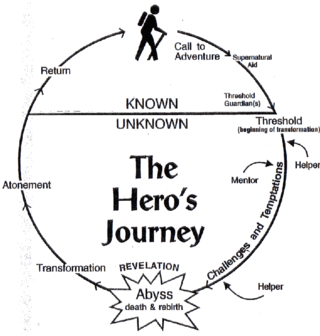
Create Your Own Hero's Journey Projects

Image result for hero's journey
Add caption
Create your own hero's journey story using the nine story dice and as many of the hero's journey elements as you can.

You must use all of the nine story dice in your story.  You can use the same one more than once. You can use other characters, locations, items and any other items you would like to use.

High scoring projects will feature most of the elements.  These are the elements we discussed in class:

The hero.
Ordinary world.
World of the unknown/adventure.
Call to adventure.
Refusal/acceptance of the call
Threshold guardian
Crossing the threshold
Allies/helper
Mentor
Supernatural aid/talisman
Shadow
Tests/trials
Supreme ordeal/abyss
Death/resurrection
Journey home
Transformation
Atonement
Reward/boon

You can find many of these terms in your English journal.  Others you can find on-line or in the video we watched in class.


Select the elements you want to include in your project and put them in the correct place around the circle.  Using complete sentences describe how each element works in you story.  Add details to make your story exciting.  Your story can contain fantastic elements; it can be funny; but it must clearly make sense as a hero's journey.  

Include illustrations.

High scoring projects will have 250 to 500 words.  They will have short paragraphs for each element.  They will have illustrations that show effort went into making them.  They will be written in ink or typed.  They will include creative touches and ideas.

This is a high-value 60% project in English.

Projects are due Thursday, Sept. 12.

Here are the dice rolled for each class:

Period 1/2


Period 3/4


Period 5